Skip to content
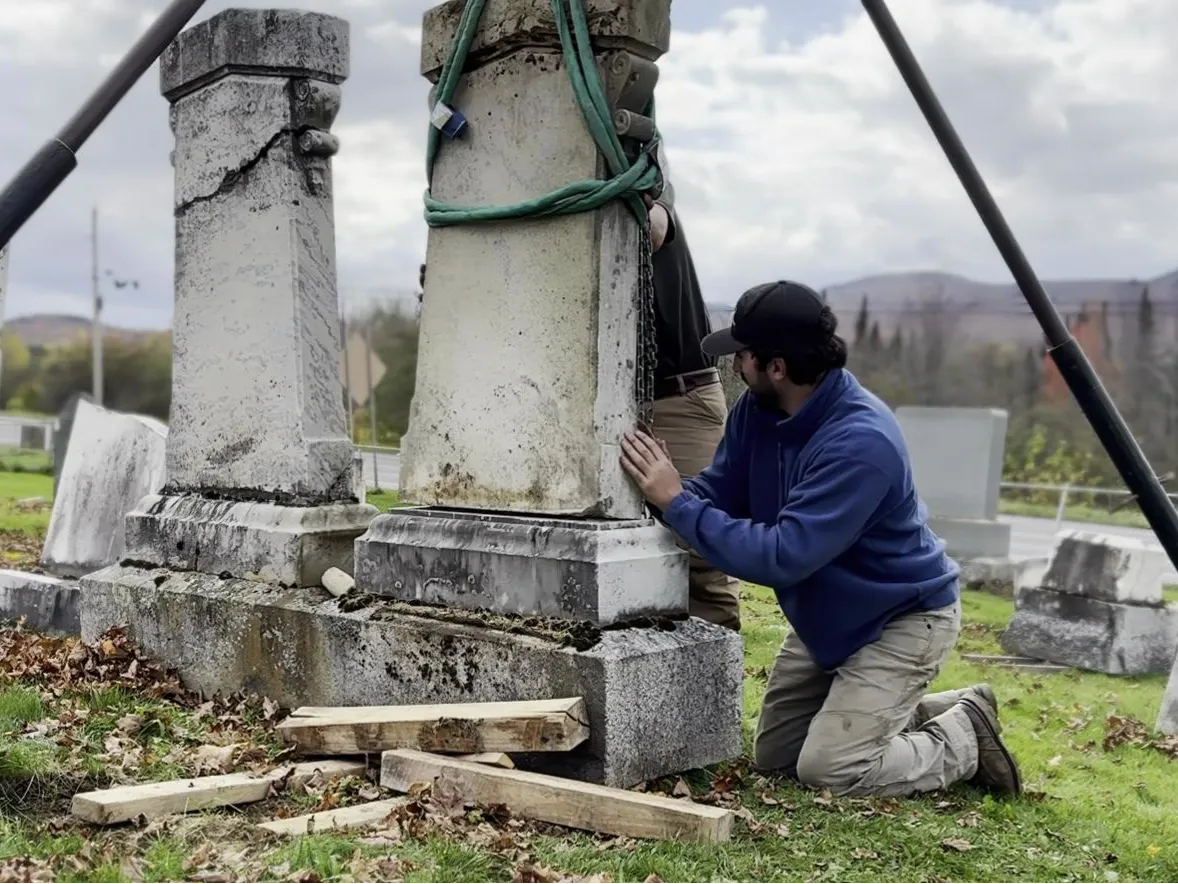
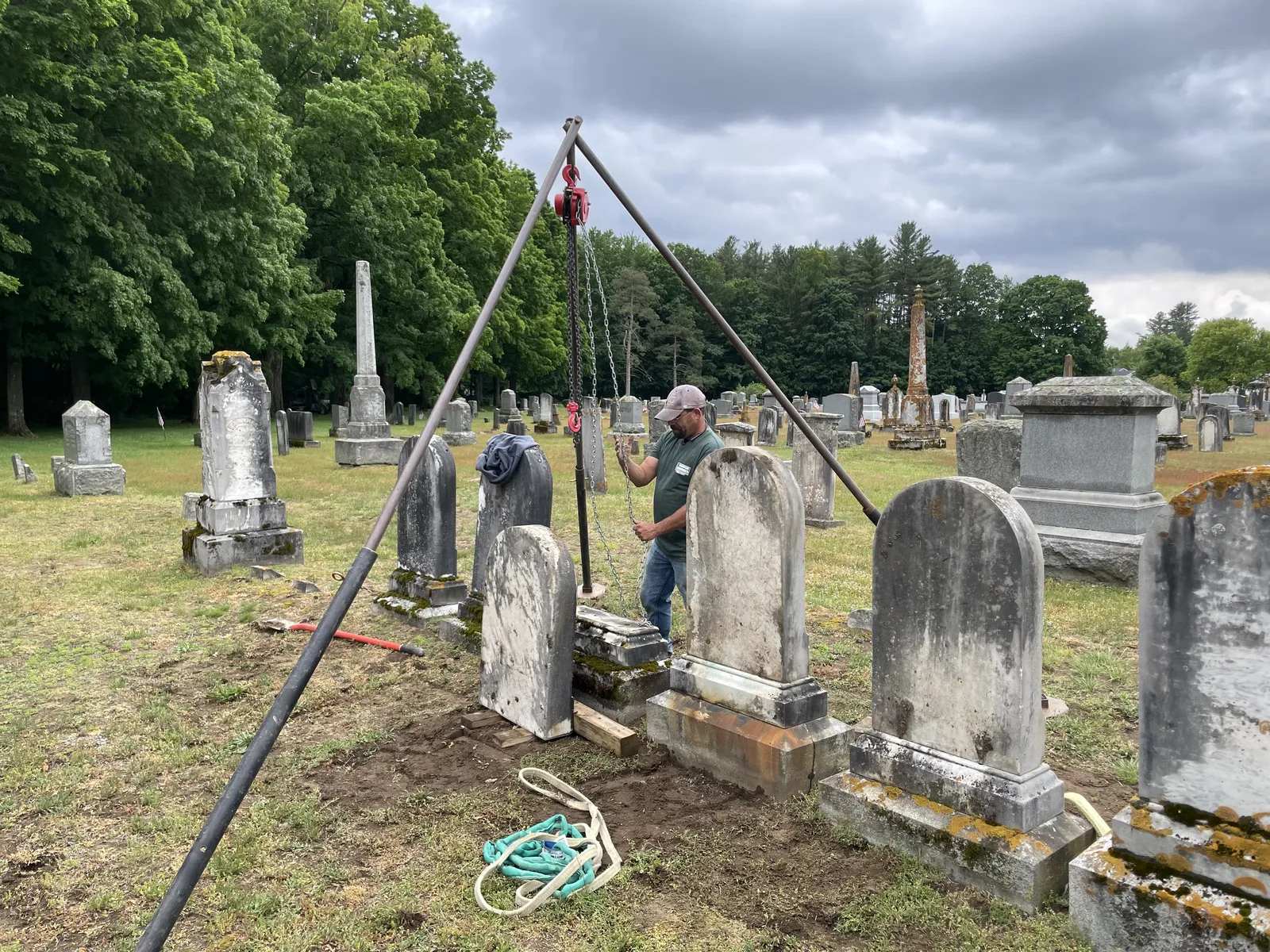
Crew using a tripod hoist for a multi-stone cemetery restoration project

For Towns & Commissions

Planned, phased, and accountable

Restoration projects need more than skilled labor — they need a written scope, phased priorities, and someone accountable across budget cycles. We work with towns, cemetery commissions, and municipalities from first assessment through final documentation.


HOW WE WORK

Structure, not just labor

Assessment & prioritization

On-site review and written conditions report — the foundation for grant applications, committee discussions, and realistic budgeting.

Phased scopes

Safety and structural risk first, then cosmetic work — organized so each phase can stand on its own within a budget cycle.

Consistent methods

Repeatable approaches across the cemetery for consistent results and easier maintenance.

Documentation

A clear record of what was done and how — useful for commissions, historical societies, and future stewards of the cemetery.

SCOPE OF WORK

What we restore

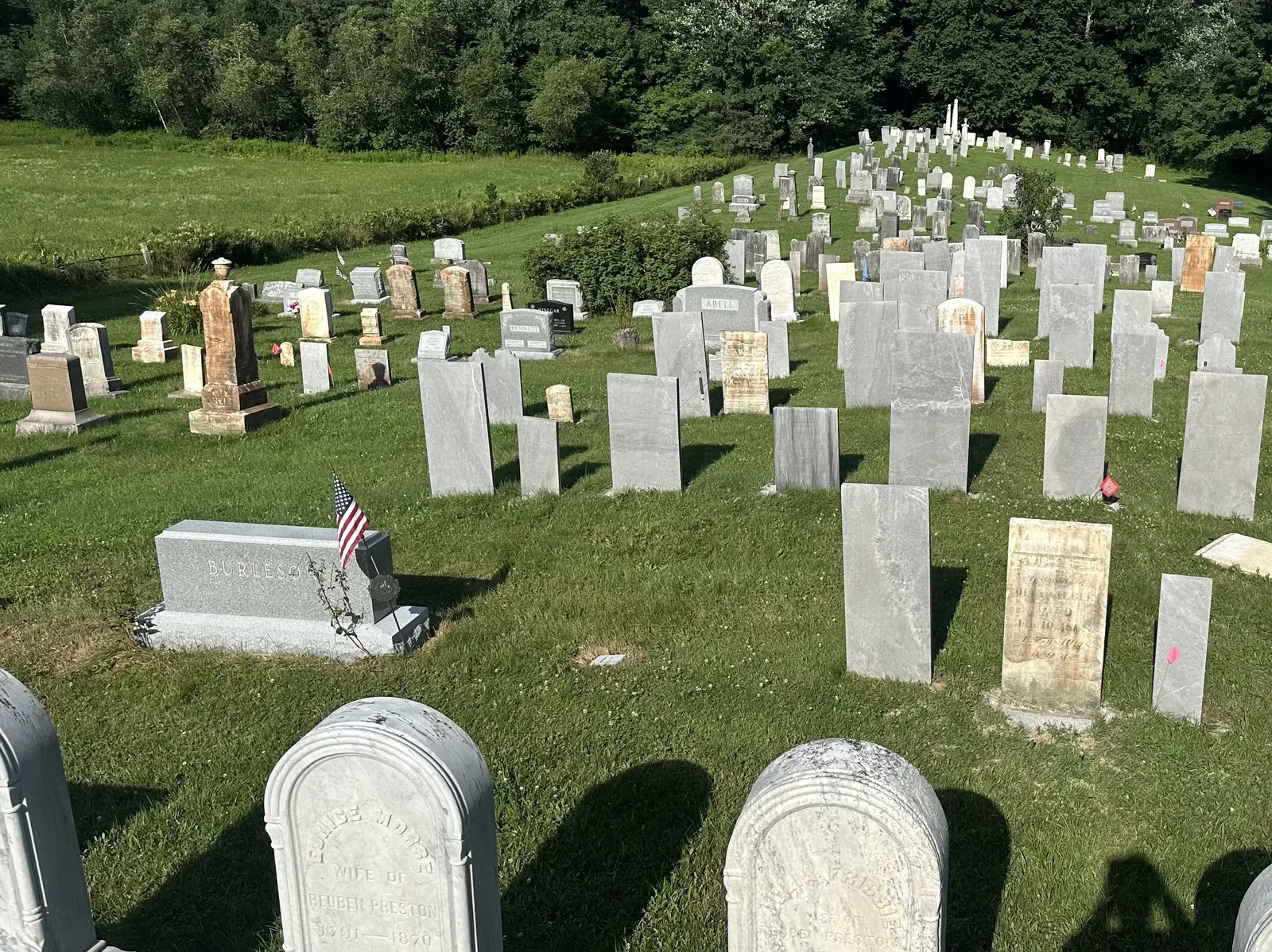
Most cemetery deterioration comes down to movement, failed foundations, breakage, long-term exposure, and accumulated biological growth. We assess each stone and recommend the approach best suited to the material, the setting, and a result that will hold. Where budget or overseer priorities call for alternatives, those are presented clearly — so you can make an informed decision, not just approve a proposal.

Leaning and Displaced Tablets

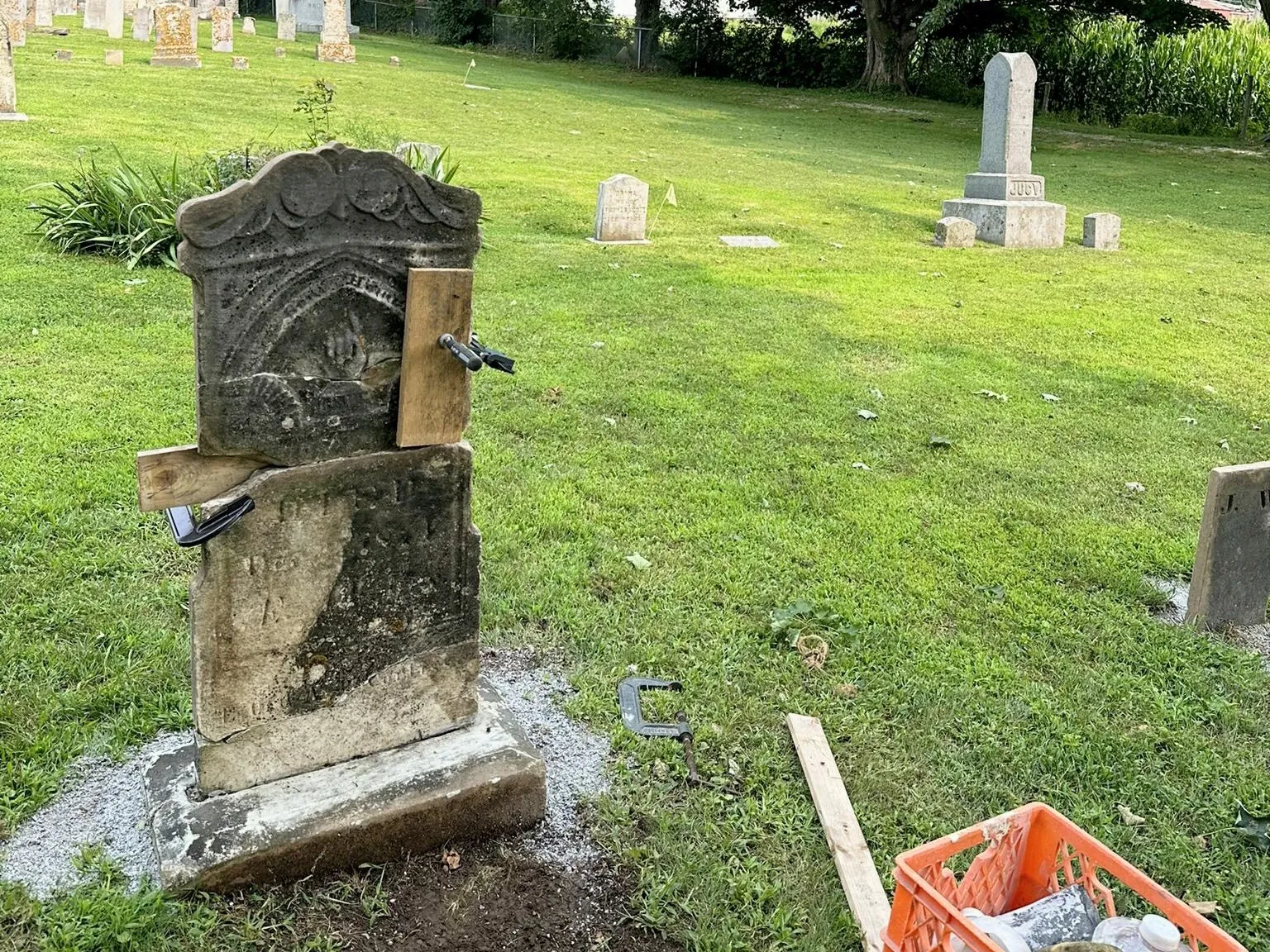
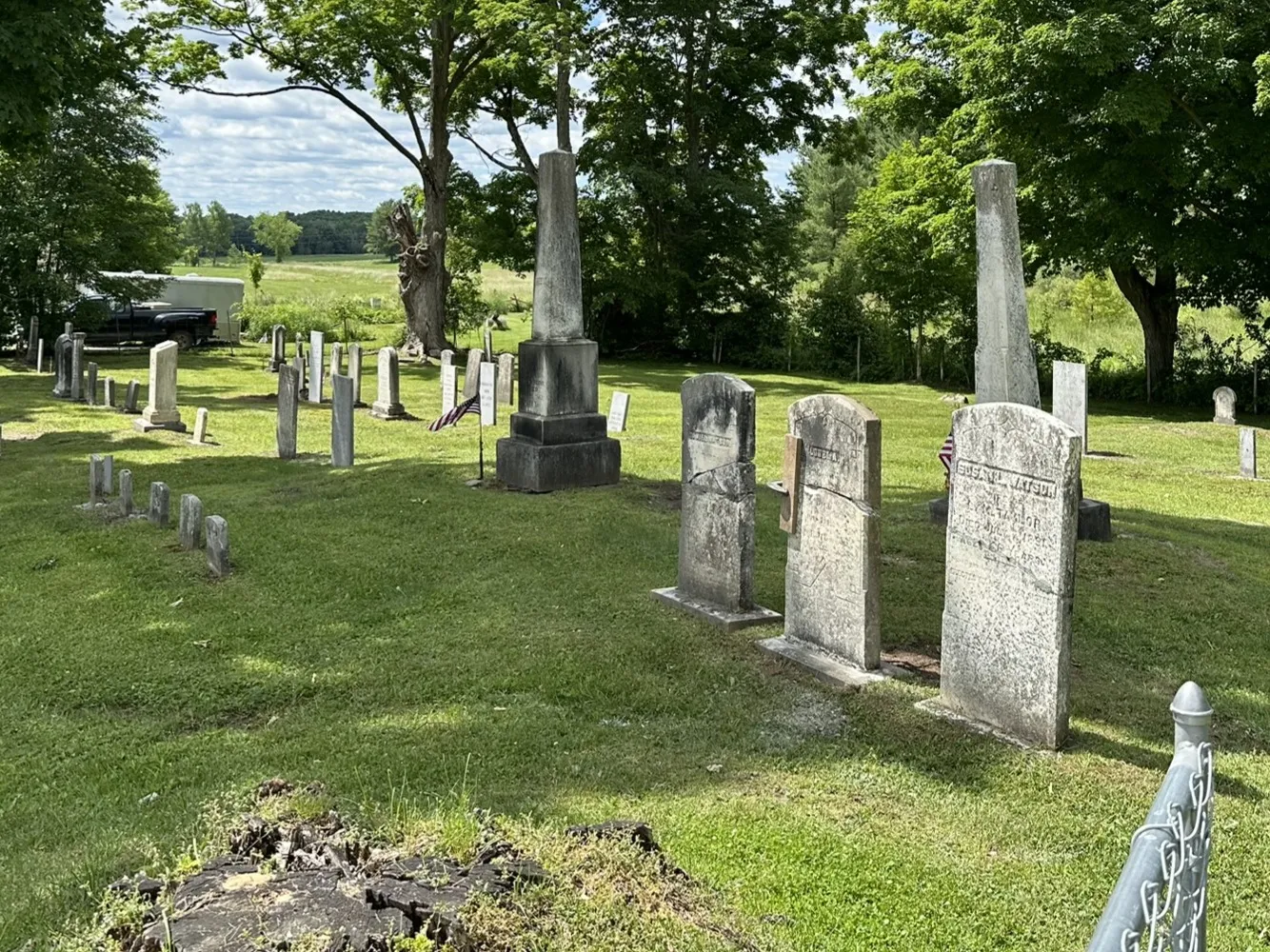
Straightening and restabilization of slab memorials using methods suited to the stone, the setting, and the degree of movement. The preferred approach is usually the one that restores stability while minimizing unnecessary disturbance to the stone.

Broken Monument Repair

Broken slab memorials and other damaged monuments are repaired using methods suited to the type of break, the condition of the stone, and the level of rebuilding required. Some repairs are straightforward; others involve reinforcement or full resetting. The repair approach is chosen for the soundest long-term result.

Releveling and Stabilization

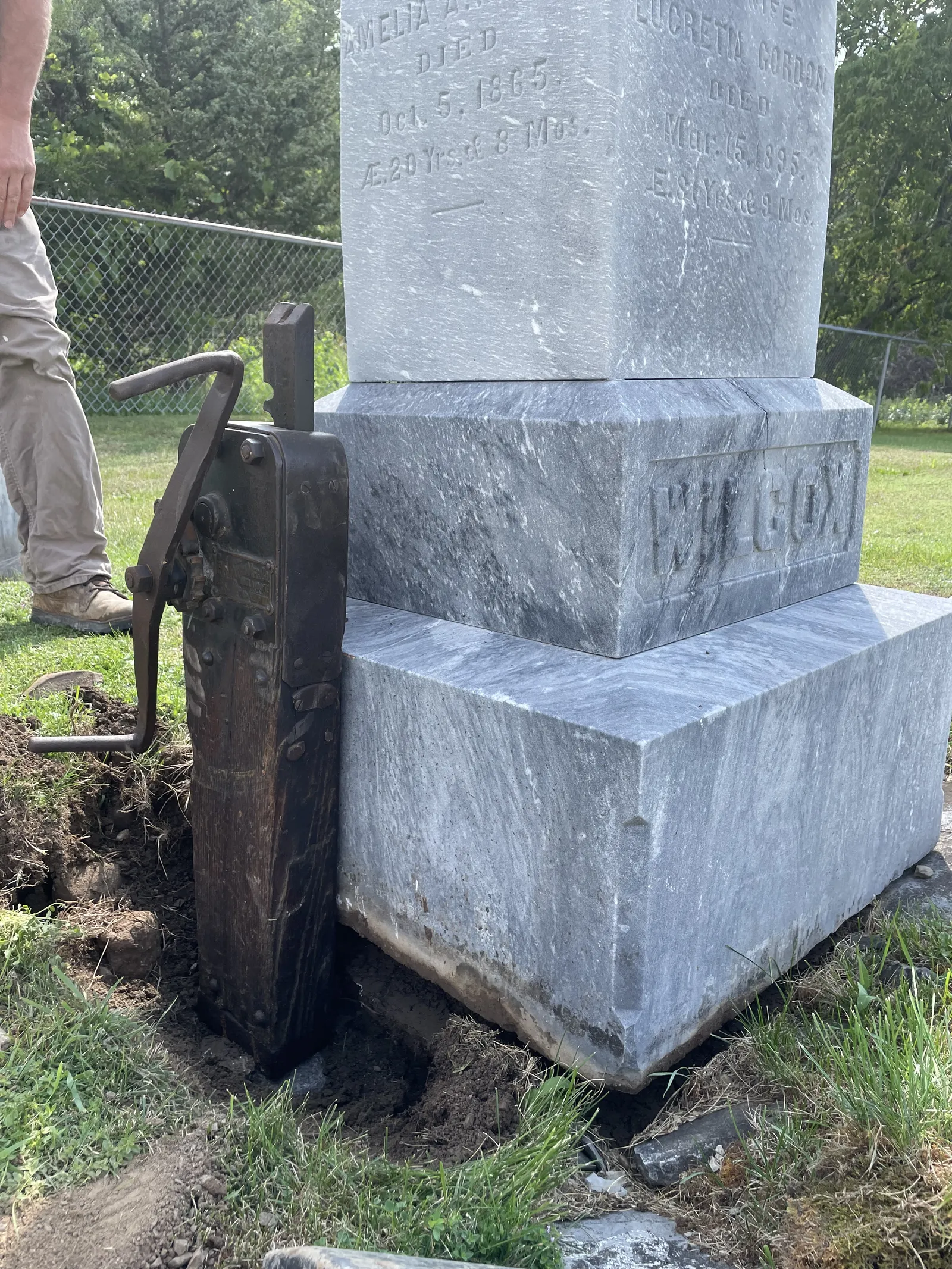
Memorials that have shifted, sunk, or settled over time can often be re-leveled and stabilized in more than one way. Depending on the lot and the monument, options range from crushed stone and granite shims to precast or full-depth replacement foundations.

Resetting and Replacement Bases

Resetting work covers tablets, dies, and other monument pieces that have shifted or come loose from their bases. Where a base is too far gone or never suited the stone, we make a new base or a slotted base built to fit the piece. The right move depends on the type and condition of the stone.

Foundation Replacement

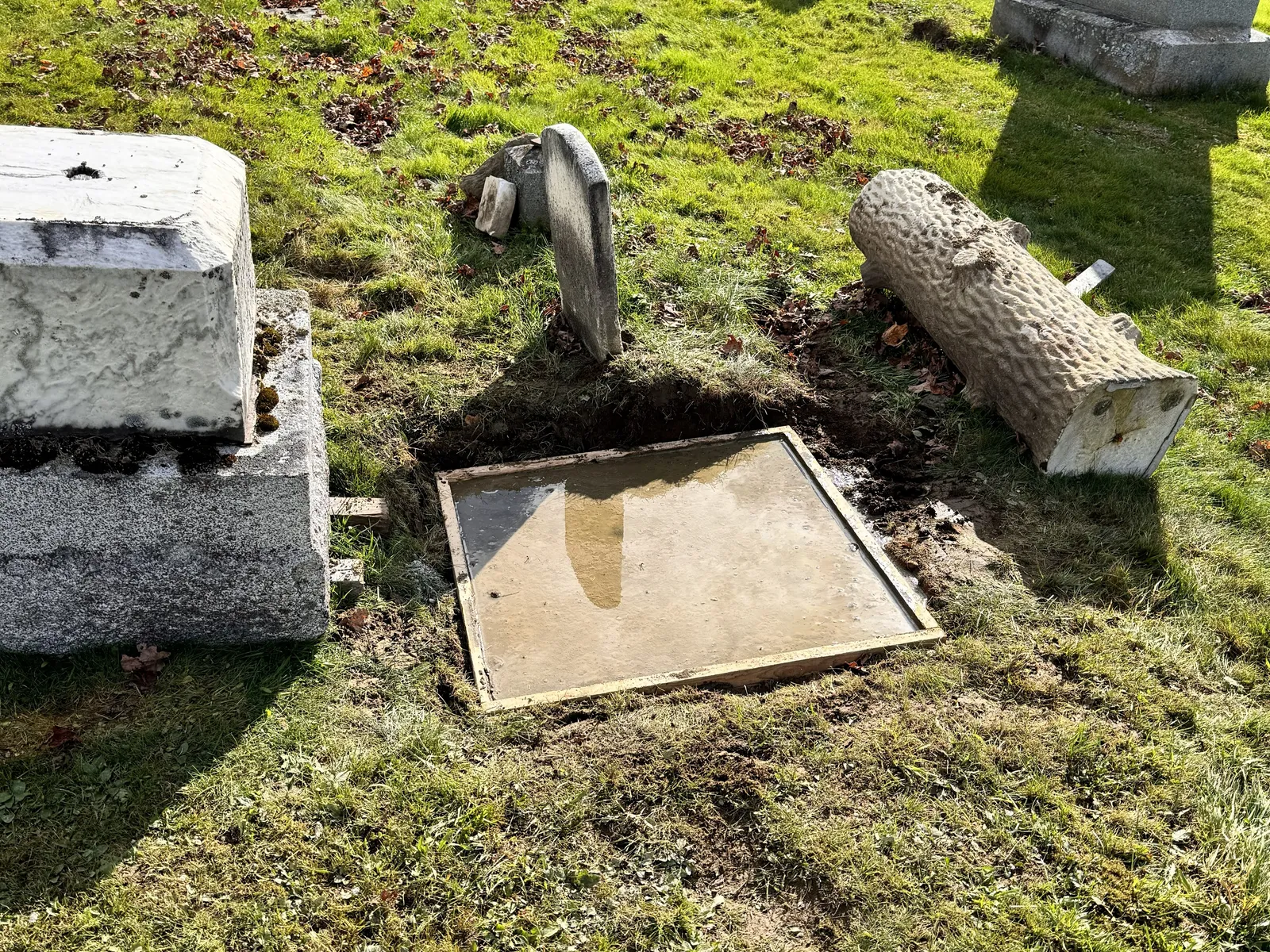
Failed or insufficient foundations are removed and replaced to the proper depth and size for the monument and the lot. This is often the right course when repeated movement or settlement cannot be corrected by surface adjustment alone. Proper base work is what keeps a memorial standing true over the long term.

Cleaning and Surface Treatment

Cemetery-wide cleaning has to be approached with realistic expectations. The right method depends on the material, the buildup, and what the overseers are trying to accomplish.

More on our cleaning approach →

On the limits of restoration

Not every memorial can be saved

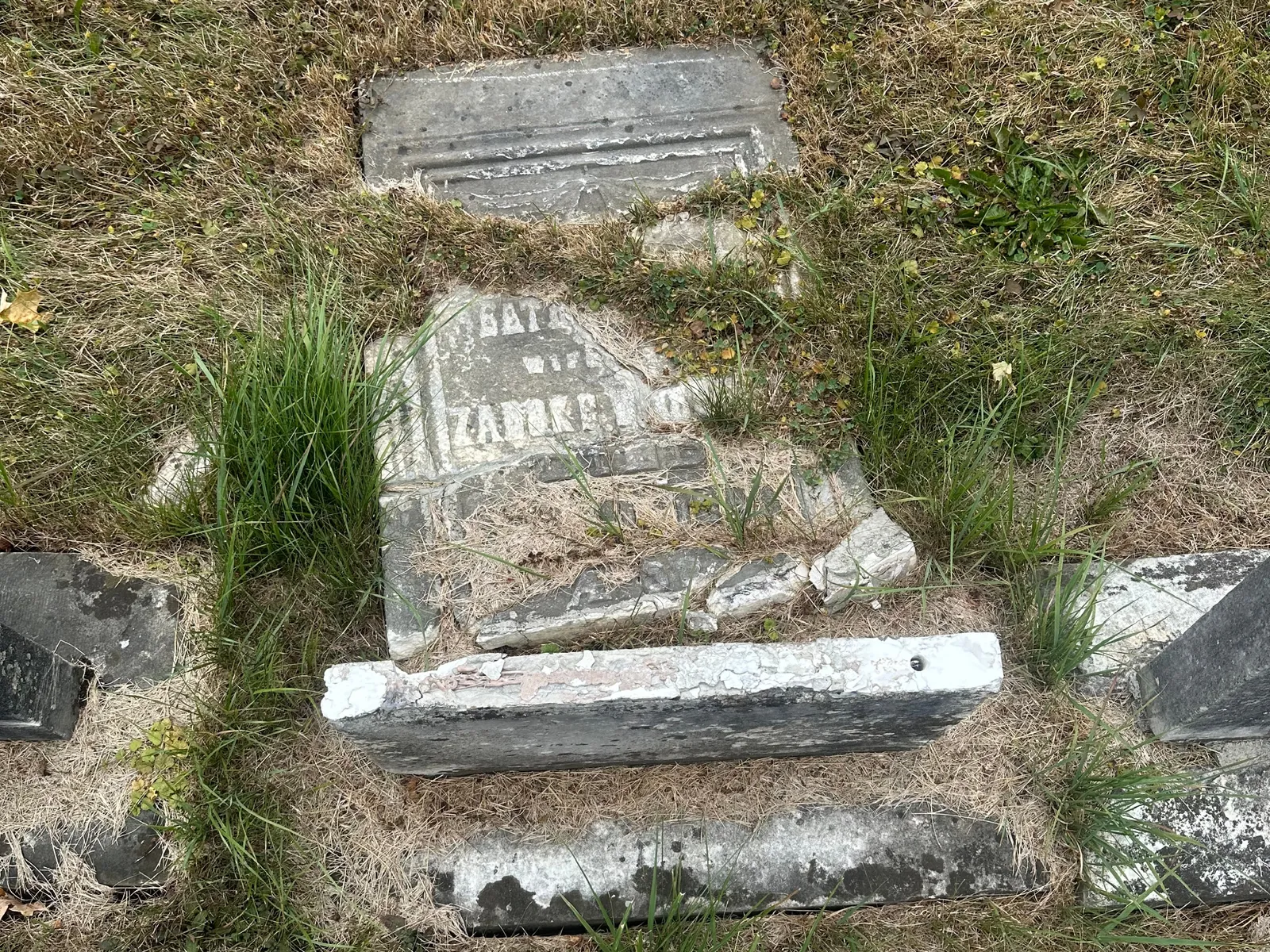
Some stones are past the threshold where restoration returns enough — extensive erosion, fractures beyond reinforcement, or structural breakdown of the underlying material. When that's the case, replacement is often the right call. We help make that decision clearly.

Honest evaluation

We will tell you when a stone is past the point of meaningful restoration — even when it means less work for us.

Replacement memorials

We offer a range of replacement options to work with budgets of all sizes.

Originals preserved

Where possible, original tablets are kept on the lot or in the cemetery's archive at the family's wishes.
A monument tablet shattered into multiple pieces on the ground, beyond what can be reassembled or restored

WORKING WITH US

What to expect when working with Champlain Monuments

A clear understanding of the work involved, the condition of the memorial, and the practical options available. We assess what's there, identify what has failed, and recommend the course of action we believe is best suited to the stone, the setting, and the long-term result.

Clear assessment

Understanding the condition of the memorial, what has failed, and what the work is likely to involve.

Useful proposals

Scope and options written in plain terms — concrete enough for families, towns, commissions, and overseers to use in grant applications and budget conversations.

Practical recommendations

The best course of action recommended first, with alternatives presented where budget, scope, or overseer priorities call for them.

A site walk carries no obligation. It gives you a clear picture of the work involved before any commitment is made.

FAQ

Cemetery Restoration FAQs

Common questions about larger-scale cemetery restoration projects.

How do we get started on a town or commission project?

A site walk is usually the best starting point. We come out, assess conditions, and put together a written scope with categories of work and estimated costs. That gives you something concrete to bring to a committee or budget conversation.

Can you help us apply for grants or funding?

We can provide documentation, scopes, and cost estimates in whatever format the application requires. We've worked alongside towns navigating the grant process and understand what's typically needed to support a submission.

How do you prioritize what gets done first?

Safety and structural risk first: stones that are actively falling or pose a hazard to visitors. Then significant lean or instability. Cosmetic work and cleaning come after. We'll walk you through the logic and you can adjust priorities based on your budget and community concerns.

Do you work in cemeteries with historic or older stones?

Yes. Older cemeteries — particularly those with slate, marble, or early granite — require careful handling. We adjust methods based on stone type and age, and we won't do anything that risks irreversible damage to a historic marker.

Can families hire you for individual monument repair in a larger cemetery?

Absolutely. Individual repair and restoration work for families is a separate service. You don't need a town project to get a single stone reset or repaired. See our <a href="/repair" style="color: var(--accent-onlight); text-decoration: underline;">repair page</a> for more on that.

What areas do you serve?

For cemetery restoration projects, we work throughout Vermont, New York, and New Hampshire. That's broader than our usual service area for single-stone work, which stays closer to home in Vermont. Reach out with your location and we'll confirm whether it's within range and what timing looks like.

Start with a site assessment

Tell us where the cemetery is and what you're seeing. We'll schedule a walk, assess conditions, and give you a written scope — something concrete you can take to a committee, a grant application, or a budget conversation.

Call Get in Touch